Cabo
This is a free digital Cabo score sheet and score keeper — no signup, automatic totals, and share via QR so everyone scores from their own phone. Cabo score sheet for 2–5 players, also known as Cambio, Pablo, or Cactus: card totals, who called, and Kamikaze, with a running score that turns exactly 100 into 50.
Game setup
Min 2, Max 5
Cabo is a trademark of its respective owner. This unofficial scorecard is designed for home and educational play and is not affiliated with or endorsed by the trademark owner.
Shop Cabo products
Affiliate links • As an Amazon Associate we earn from qualifying purchases.
Key Features of Cabo scorecard
- Track 2 to 5 players on one card.
- Select who called Cabo: they score 0 when lowest or tied, otherwise their total plus 10.
- Kamikaze (two queens and two kings) scores 0 and sets everyone else to 50.
- Running totals: exactly 100 becomes 50 once per player, and the lowest total leads.
- Real-time leaderboard with current leader highlighting.
- Mobile-optimized interface for on-the-go scoring.
- No registration required - start playing immediately.
- Cabo scoring app that works offline and syncs when back online.
How to Play Cabo
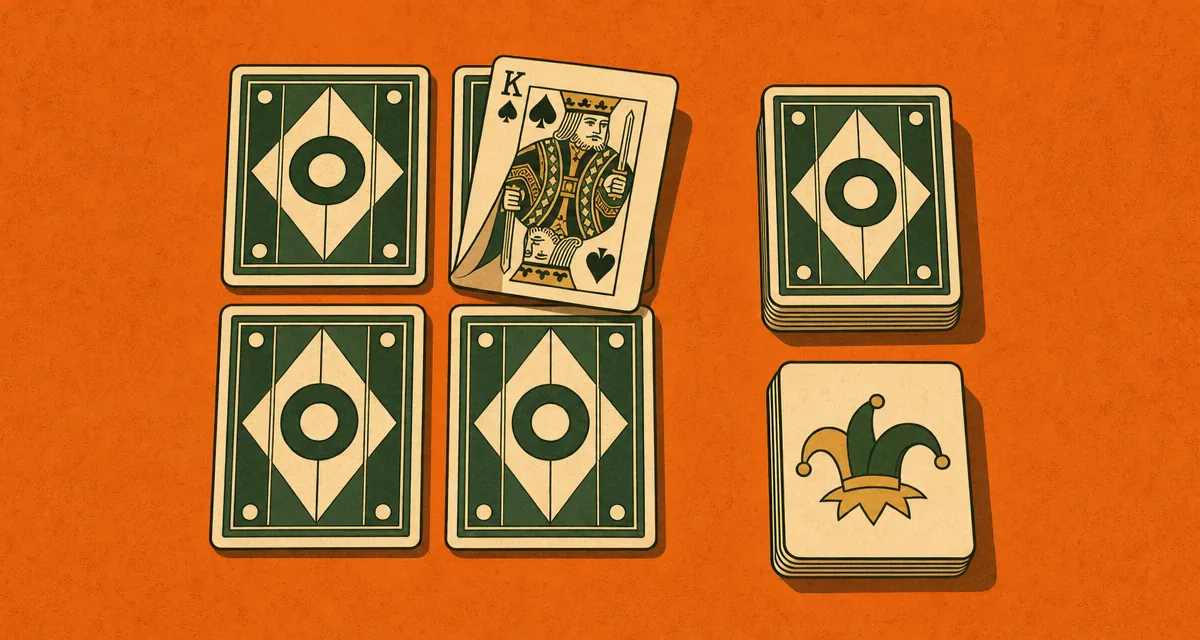
- Deal four cards face down in a 2×2 grid. Each player looks once at the two cards nearest them, then plays from memory.
- On your turn, draw and swap or discard for a peek, spy, or swap, take the top discard, or call Cabo. Some tables say Cambio, Pablo, or Cactus for the same call. After a call, every other player takes one last turn.
- Jokers score 0, aces 1, cards 2–10 their face value, jacks 11, queens 12, and kings 13. Suits do not change the points.
- The caller scores 0 when they are lowest or tied for lowest. If anyone is lower, the caller scores their total plus 10. If the draw pile runs out, nobody called, so there is no penalty.
- Kamikaze: ending with exactly two queens and two kings scores 0 for that player and 50 for everyone else.
- Add each round to the running total. Exactly 100 becomes 50, once per player. When a player goes over 100, the round still finishes and the lowest total wins.
Tips & Strategy for playing Cabo
- Call Cabo when you are confident you are around 5 points or lower.
- Use a 7 or 8 early to peek at a card you have not seen yet.
- Watch who picks up from the discard pile before you swap a card with a jack or queen.
Frequently asked questions about Cabo
What do I enter on the Cabo scorecard each round?
Add the cards in front of each player: joker 0, ace 1, 2–10 face value, jack 11, queen 12, king 13. Type that total. Select who called Cabo, or leave the caller clear if the draw pile ran out. Check Kamikaze only for a player who finished with two queens and two kings.
How does the Cabo caller score?
If the caller is lowest or tied for lowest, they score 0 and everyone else keeps their card total. If anyone is lower, the caller scores their total plus 10. When nobody called because the draw pile ran out, leave the caller clear and everyone keeps their total.
What is a Kamikaze in Cabo?
A player who ends the round with exactly two queens and two kings scores 0. Everyone else scores 50 for that round, instead of their card totals. Check Kamikaze for that player only.
When does Cabo end, and who wins?
Keep the running total. The first time a player lands on exactly 100, it becomes 50. That reset happens only once for each player. When anyone goes over 100, finish the round — the lowest running total wins. A tie shares the win.
What else is Cabo called, and how is it related to Golf and Skyjo?
Cabo is also known as Cambio, and in some places as Pablo or Cactus. It is a memory card game in the same family as Golf, Skyjo, and Rat-a-Tat Cat: a few hidden cards, a race for the low total, and a call that ends the round. This scorecard follows the common folk rules played with a standard deck plus two jokers, without the red kings.
How does this Cabo scorecard work?
Enter scores in the rows for each hand, hole, or round — the scorecard updates running totals and highlights the leader automatically. You can add players, rename them, and keep the sheet open for the whole session. No account is required: open the page and start tracking points. Totals are calculated for you so you can focus on the game.
Can I use ScorecardGO to score Cabo on mobile?
Yes. ScorecardGO is built for phones and tablets: large tap targets, readable tables, and layouts that fit narrow screens. You can score Cabo wherever you're playing, including at a table or outdoors. The same scorecard also works on a desktop if you prefer a larger screen.
Does this Cabo scorecard work offline?
Once this Cabo scorecard page is loaded, you can keep entering scores without an internet connection. Your scores stay in the browser on your device, so a dropped connection does not wipe a local game. If you have shared the scorecard so others can follow along, those live updates need a connection and catch up when you are back online. Bookmark the page if you want to reopen the same sheet later.
Is this Cabo scorecard free?
Yes. ScorecardGO is free to use in the browser with no account required. Open the Cabo scorecard and start tracking points right away. There is no signup wall and no paid plan required to keep score.
Can I share this Cabo scorecard with a QR code?
Yes. Open Share on the scorecard and show the QR code so everyone playing can follow the Cabo score on their own phone. You choose whether guests can enter scores or only watch, and you can change that during the game. People who cannot scan can type the six-character code at scorecardgo.com/join. Sharing is optional; if you never tap Share, the scorecard stays on your device.
Is ScorecardGO affiliated with the makers of Cabo?
Cabo is a trademark of its respective owner. This unofficial scorecard is designed for home and educational play. ScorecardGO is not affiliated with or endorsed by the trademark owner.